


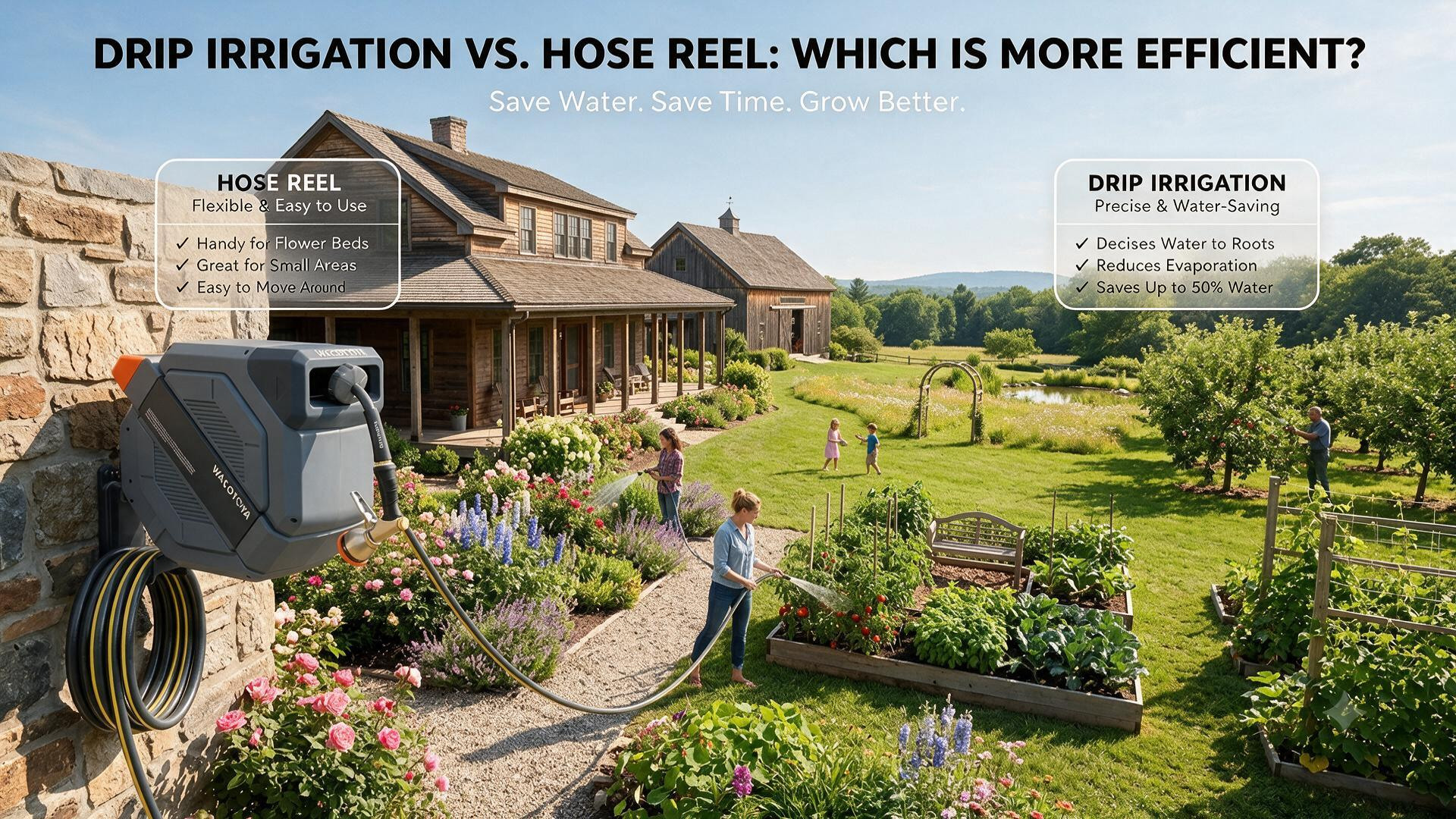
Raised garden beds make it easier to control soil quality, drainage, and plant spacing—but they can also dry out faster than in-ground beds. The best watering method is not simply the one that uses the least water. It is the one that matches your garden size, planting style, schedule, and willingness to maintain a system.

For most home gardeners, the decision comes down to two practical options: drip irrigation or hand watering with an outdoor hose reel. Both can be efficient when used correctly, and many gardeners get the best results by combining them.
Why Raised Beds Need a Thoughtful Watering Plan
Raised beds often contain loose, well-draining soil. That is excellent for roots, but it also means moisture can move through the bed quickly during hot, dry weather. Shallow watering may wet only the surface, while excessive watering can wash nutrients downward or leave sensitive plants stressed.
The goal is to deliver water to the root zone at a pace the soil can absorb. Morning watering, mulch, and checking the soil before turning on the water can make either drip irrigation or hose watering more effective.
Option 1: Drip Irrigation for Raised Garden Beds
Drip irrigation uses low-pressure tubing and emitters to apply water slowly near plant roots. According to the U.S. EPA, microirrigation can use 20% to 50% less water than conventional sprinkler systems because it reduces runoff and evaporation.
Advantages of drip irrigation
Delivers water directly to the soil near the root zone.
Reduces water on leaves, paths, and nearby hardscaping.
Can be connected to a timer for consistent watering.
Works especially well for permanent rows or predictable plant spacing.
Makes it easier to water while traveling or during a busy week.
Limitations of drip irrigation
Requires planning, setup, and seasonal maintenance.
Emitters can clog, shift, or become damaged.
Tubing may need to be rearranged as crops rotate or plants grow.
It is less convenient for containers, newly transplanted seedlings, or occasional deep watering outside the planned zones.
Drip irrigation is often the best primary system for gardeners with several established beds and a regular planting layout. It is efficient, but it is not completely hands-off. Lines should be checked for leaks and blocked emitters, and the watering schedule still needs to change with rainfall and temperature.
Option 2: A Wall-Mounted Retractable Hose Reel
A wall-mounted outdoor hose reel offers a more flexible approach. Instead of installing a separate line in every bed, you pull out only the length of hose you need, water each area, and let the hose retract when the job is finished.

The Wacotoya Retractable Garden Hose Reel is available with a 5/8-inch hose in 100-foot and 130-foot lengths. Its 180-degree swivel helps the hose follow your direction of travel, while the any-length locking system lets you stop at the distance you need. The upgraded nozzle includes nine spray patterns, so you can move from a gentle, rain-like spray for seedlings to a more focused pattern for deep watering.
Advantages of a retractable hose reel
Reaches raised beds, pots, lawns, and cleanup areas from one location.
Gives you visual control over how much water each plant receives.
Requires less permanent tubing in the garden.
Retracts into an enclosed housing for tidy storage.
Works well for changing layouts and mixed plantings.
Limitations of hose watering
Requires your time and attention.
Water use depends on technique and nozzle choice.
Can become inconsistent if watering is rushed.
A poorly placed reel may not reach every bed efficiently.
Hand watering works best when you water close to the soil surface, move slowly, and pause long enough for water to soak in rather than run off. A retractable reel removes much of the friction associated with dragging, untangling, and recoiling a loose hose.
Drip Irrigation vs. Hose Reel: Which Is More Efficient?
Drip irrigation is generally more water-efficient for routine watering of fixed beds. A retractable hose reel is more flexible for gardens that change throughout the season or include a mix of raised beds, containers, borders, and lawn.
Choose drip irrigation if your priority is automated, targeted watering. Choose a wall-mounted hose reel if your priority is versatility, close observation, and fast access to water throughout the yard.


